Low Resistance Testing: The Small Measurement That Prevents Big Electrical Failures
Low Resistance Testing: The Small Measurement That Prevents Big Electrical Failures
In modern electrical systems, catastrophic failures rarely start with dramatic sparks or loud alarms. They begin silently — inside joints, terminals, busbars, breakers, and grounding connections. A slightly loosened bolt. A corroded contact surface. A poorly crimped lug.
These small imperfections introduce low-level resistance, often invisible to conventional testing. Over time, that resistance becomes heat. Heat becomes degradation. Degradation becomes failure.
This is where Low Resistance (LR) testing proves its real value.
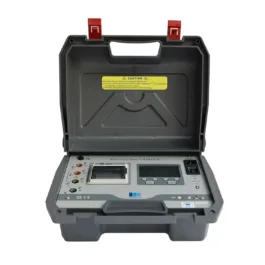
Using a Low Resistance Tester, engineers can detect micro-ohm level issues long before they escalate into downtime, fire hazards, or equipment damage. For utilities, industries, and infrastructure operators, LR testing is not optional — it is a foundational reliability practice.
At Motwane, low resistance testing is treated not as a checkbox, but as a critical diagnostic discipline that protects assets, people, and operations.
Understanding Low Resistance Testing: Why It Matters More Than You Think
Low Resistance testing focuses on measuring very small electrical resistance values, typically in the micro-ohm (µΩ) or milli-ohm (mΩ) range.
Unlike insulation resistance testing — which checks how well current is blocked — LR testing checks how well current flows where it should flow.
Why low resistance matters
Even a tiny increase in resistance can have serious consequences:
- Higher resistance → higher heat (I²R losses)
- Higher heat → accelerated aging
- Aging → loose joints, oxidation, mechanical failure
- Failure → unplanned shutdowns or safety incidents
In high-current systems, the impact is magnified. A resistance increase of just a few micro-ohms in a busbar joint can lead to dangerous temperature rise under load.
Low Resistance testing answers one core question:
Are your current-carrying paths truly healthy?
Technical Overview: How Low Resistance Testing Works
The principle behind LR testing
Low resistance testing is based on Ohm’s Law, but implemented in a way that eliminates measurement errors common at low values.
To achieve accurate results, LR testing uses:
- High test current (10 A, 50 A, 100 A or more)
- Four-wire Kelvin method
The Kelvin (4-wire) method explained simply
Think of it like measuring water flow in a pipe:
- Two heavy cables inject current
- Two separate sense leads measure voltage drop
This separation ensures:
- Lead resistance does not affect results
- Contact resistance is measured accurately
- Results are repeatable and reliable
Typical parameters measured
- Contact resistance of breakers
- Joint resistance of busbars
- Grounding and bonding resistance
- Transformer winding connections
- Cable joints and terminations
Applicable standards
Low resistance testing is guided by international standards such as:
- IEC 62271 (switchgear)
- IEEE C57 / C37
- ASTM B193
- IS standards for electrical installations
Motwane designs its Low Resistance Testers to meet and exceed these standards, ensuring field-ready accuracy.
Equipment Overview: Motwane Low Resistance Testers
Motwane has decades of experience in electrical testing, and its Low Resistance Testers are built for real-world engineering conditions — not lab benches.
Key features of Motwane Low Resistance Testers
- High output current (up to 100 A or more)
- Micro-ohm resolution
- True 4-wire Kelvin measurement
- Digital display with stable readings
- Rugged construction for site use
- Safety interlocks and thermal protection
Why engineers prefer Motwane
- Designed for Indian and global field conditions
- Reliable performance under high load testing
- Easy-to-use interface for technicians
- Proven accuracy in utilities and heavy industry
- Strong service and technical support
Motwane LR instruments are trusted where precision is non-negotiable — substations, factories, railways, and power plants.
Practical Applications: Where Low Resistance Testing Is Critical
Low resistance testing is relevant anywhere high current meets mechanical connection.
Key industries and use cases
- Power generation — generator connections, transformer terminals
- Transmission & distribution — busbars, isolators, breakers
- Manufacturing plants — MCCs, panels, grounding systems
- Railways & metros — traction connections, bonding
- Oil & gas — earthing and explosion-safe bonding
- Renewable energy — inverter connections, DC busbars
Common components tested
- Circuit breaker main contacts
- Busbar joints and links
- Transformer winding joints
- Cable lugs and terminations
- Earthing and bonding conductors
Wherever failure can cause downtime, LR testing belongs in the maintenance plan.
Step-by-Step Guide: How Low Resistance Testing Is Done
Step 1: Preparation
- Isolate and de-energize equipment
- Clean contact surfaces if required
- Ensure proper mechanical tightening
Step 2: Test setup
- Connect current leads firmly to test points
- Attach sense leads as close as possible to the joint
- Ensure good probe contact
Step 3: Select test current
- Choose appropriate current based on component
- Higher current improves accuracy for very low resistance
Step 4: Perform the test
- Inject current using the low resistance tester
- Allow reading to stabilize
- Record resistance value
Step 5: Repeat and compare
- Test similar phases or joints
- Compare against baseline or manufacturer limits
Safety tips
- Never test energized equipment
- Allow cooling time between tests
- Use PPE and follow lock-out/tag-out procedures
Motwane testers are designed to make this process safe, fast, and repeatable.
Troubleshooting & Interpretation: Making Sense of Results
What is a “good” resistance value?
There is no single number — it depends on:
- Component type
- Material
- Design specifications
- Comparison with similar connections
Red flags to watch for
- Significant difference between phases
- Rising resistance over time
- Values exceeding historical baseline
- Unstable or fluctuating readings
Common causes of high resistance
- Loose bolts or clamps
- Oxidation or corrosion
- Poor crimping or welding
- Mechanical wear in contacts
Actionable solutions
- Retighten connections with torque control
- Clean or replace contact surfaces
- Replace damaged components
- Retest after corrective action
LR testing is not just measurement — it’s decision-making data.
Case Studies: Real-World Impact of Low Resistance Testing
Case 1: Preventing breaker failure in a substation
Routine LR testing revealed one phase of a circuit breaker with resistance 40% higher than others. The breaker showed no visible damage.
Upon inspection:
- Contact erosion was found
- Breaker was serviced before failure
- Potential outage avoided
Case 2: Industrial panel overheating issue
An industrial plant faced unexplained heating in an MCC panel. Thermal imaging showed hotspots, but LR testing pinpointed the exact high-resistance joint.
Fixing one connection:
- Reduced temperature rise
- Improved energy efficiency
- Prevented fire risk
These are everyday wins enabled by Motwane Low Resistance Testers.
Benefits & ROI: Why LR Testing Pays for Itself
Direct benefits
- Early fault detection
- Reduced unplanned downtime
- Improved safety
- Longer equipment life
Financial ROI
- Avoids catastrophic failures
- Reduces maintenance costs
- Prevents production losses
- Minimizes warranty disputes
A single prevented failure often justifies the cost of the tester many times over.
Future Trends: Where Low Resistance Testing Is Headed
Emerging developments
- Digital logging and trend analysis
- Integration with predictive maintenance systems
- Smart diagnostics and asset health scoring
- Combined thermal + resistance analysis
Motwane continues to innovate, aligning LR testing with condition-based maintenance and Industry 4.0 practices.
Conclusion: Low Resistance Testing Is Non-Negotiable
In electrical systems, reliability is built on details. Low resistance testing focuses on those details — the joints, contacts, and connections that silently carry the system’s load.
Ignoring LR testing is not a cost-saving measure; it’s a risk.
With robust, field-proven Low Resistance Testers, Motwane empowers engineers to:
- Detect problems early
- Make informed maintenance decisions
- Protect assets and people
- Build safer, more reliable electrical systems
In a world where downtime is expensive and safety is paramount, Low Resistance testing is not optional — it’s essential.


Comments
Post a Comment