Low Resistance Testing: Measuring What Keeps Power Systems Alive
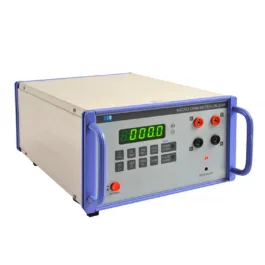
In electrical systems, failure rarely announces itself loudly. It starts quietly — inside a joint, across a contact surface, or within a bolted connection that looks perfectly fine from the outside. The resistance increases by a few micro-ohms. Heat follows. Losses grow. And eventually, a “sudden” failure brings operations to a halt.
Low Resistance (LR) testing exists to catch this silent deterioration early.
This is not a test engineers perform out of habit. It is a test that separates stable systems from vulnerable ones, and planned maintenance from forced shutdowns. In modern power networks, where load demands are high and margins are thin, measuring low resistance accurately is no longer optional — it is foundational.
This article explores low resistance testing from the ground up: what it truly measures, why conventional inspections miss the danger, how engineers should perform it correctly, and why precision instruments like Motwane’s Low Resistance Testers matter in real-world conditions.
Understanding Low Resistance: Why Milliohms Matter
Resistance is often taught as a simple concept. But in power systems, the most dangerous resistance values are not high — they are slightly higher than they should be.
Low resistance testing focuses on:
- Contact resistance
- Joint resistance
- Bonding resistance
- Winding and busbar resistance
These values typically lie in the micro-ohm to milli-ohm range.
A loose connection that increases resistance by just 0.1 milliohm may look harmless on paper. Under high current, that tiny deviation becomes a heat generator. Over time, it accelerates oxidation, loosens the joint further, and pushes the system toward failure.
Think of it like cholesterol in arteries. The blockage builds silently. Symptoms appear only when damage is already severe.
Low resistance testing is the diagnostic tool that reveals this buildup early.
Why Visual Inspection and Continuity Tests Are Not Enough
Many electrical failures occur in systems that passed visual inspection.
Why?
Because:
- A joint can look tight and still have poor electrical contact
- Oxidation layers are invisible
- Micro-cracks cannot be seen
- Continuity tests only confirm presence of a path, not quality of the connection
A continuity buzzer treats a perfect joint and a failing joint the same. Low resistance testing does not.
By injecting high current and measuring the resulting voltage drop with precision, LR testing exposes weaknesses that other methods simply cannot detect.
The Science Behind Low Resistance Testing (Without the Math Headache)
Low resistance testing works on a simple physical principle:
Good connections allow current to flow with minimal opposition. Bad connections resist it — and that resistance can be measured.
However, measuring very low resistance accurately is technically challenging.
Key principles involved:
- High current injection (typically 10 A to 200 A)
- Four-wire (Kelvin) measurement to eliminate lead resistance
- Stable current source to ensure repeatable readings
- High-resolution voltage measurement
This is why ordinary multimeters are unsuitable. They are not designed to resolve resistance values at such low levels with stability or confidence.
Motwane low resistance testers are purpose-built to operate in this exact range — where accuracy actually matters.
Where Low Resistance Testing Plays a Critical Role
Low resistance testing is not limited to one component or industry. It spans the entire electrical ecosystem.
Common assets tested include:
- Busbars and busbar joints
- Circuit breaker contacts
- Isolators and disconnectors
- Transformer windings
- Earthing and bonding systems
- Cable joints and terminations
- Switchgear assemblies
- Rail and industrial grounding grids
Industries that rely heavily on LR testing:
- Power generation and transmission
- Substations and utilities
- Heavy manufacturing plants
- Railways and metro systems
- Oil & gas installations
- Data centers
- Steel, cement, and chemical plants
Wherever high current flows, low resistance testing becomes a safety and reliability requirement — not a recommendation.
Why Engineers Trust Dedicated Low Resistance Testers
Measuring milliohms in an industrial environment is not easy. Temperature variations, electromagnetic noise, surface contamination, and lead resistance all distort readings.
A dedicated Low Resistance Tester addresses these challenges through design.
What sets Motwane Low Resistance Testers apart:
- High current output for meaningful measurements
- Robust Kelvin clamp systems
- Stable readings even in electrically noisy environments
- Clear digital displays with repeatability
- Rugged construction for field conditions
- Compliance with relevant testing standards
This is not about features on a datasheet. It’s about confidence in the result — especially when decisions worth lakhs or crores depend on it.
How Engineers Should Perform Low Resistance Testing (The Right Way)
Low resistance testing is simple in concept but unforgiving in execution. Small mistakes lead to misleading results.
Step 1: Prepare the Test Point
- Clean contact surfaces if accessible
- Remove oxidation or dirt where possible
- Ensure mechanical tightness before electrical testing
Step 2: Use Proper Kelvin Connections
- Separate current and voltage leads
- Ensure voltage probes are placed directly across the joint under test
- Avoid shared contact points
Step 3: Apply the Test Current
- Select appropriate current based on asset size
- Allow readings to stabilize
- Avoid rushing measurements
Step 4: Record and Compare
- Compare results with baseline or historical values
- Look for deviations, not just absolute numbers
- Consistency across similar joints is key
Step 5: Interpret, Don’t Guess
- High resistance compared to identical connections indicates a problem
- Sudden changes from previous records demand investigation
Interpreting Results: What the Numbers Are Really Saying
Low resistance values mean nothing in isolation.
A reading of 120 micro-ohms could be acceptable — or alarming — depending on context.
Engineers should focus on:
- Trend analysis
- Comparison between phases
- Comparison between similar joints
- Deviation from historical data
Red flags include:
- One phase consistently higher than others
- Resistance increasing over time
- Large variation between identical components
- Fluctuating or unstable readings
Low resistance testing is less about passing or failing — and more about early warning.
Common Problems Revealed by Low Resistance Testing
LR testing often uncovers issues that no other test highlights:
- Poor crimping in cable lugs
- Inadequate surface contact in busbars
- Degraded breaker contacts
- Hidden corrosion
- Uneven pressure distribution in bolted joints
- Manufacturing defects in switchgear assemblies
Each of these problems, if ignored, eventually turns into heat damage, insulation failure, or catastrophic breakdown.
Real-World Insight: A Failure That Didn’t Have to Happen
In a high-load industrial plant, a shutdown occurred without warning. Investigation revealed a severely burnt busbar joint.
The joint had passed:
- Visual inspection
- Continuity checks
- Thermal scans (under low load)
What it never underwent was low resistance testing.
Post-failure measurement showed resistance values several times higher than adjacent joints. A simple LR test during routine maintenance would have exposed the issue months earlier.
The cost of the tester? Negligible.
The cost of the failure? Production loss, equipment damage, and safety risk.
The Financial Logic Behind Low Resistance Testing
Low resistance testing delivers one of the highest returns on investment in electrical maintenance.
Tangible benefits:
- Reduced unplanned outages
- Lower I²R losses
- Extended asset life
- Improved energy efficiency
- Safer working environments
Intangible benefits:
- Predictable maintenance schedules
- Better engineering decisions
- Higher system confidence
- Regulatory and audit readiness
In reliability engineering, few tests offer so much insight with so little disruption.
The Future of Low Resistance Testing
Low resistance testing is evolving alongside digital maintenance strategies.
Emerging trends include:
- Integration with predictive maintenance programs
- Digital record-keeping and trend analysis
- Smarter instruments with automated test sequences
- Condition-based maintenance driven by resistance trends
As power systems become more complex and loads increase, the ability to measure small changes early will define successful operations.
Motwane continues to innovate in this space, aligning test precision with real-world engineering needs.
Why Low Resistance Testing Is No Longer Optional
Electrical systems don’t fail because resistance becomes infinite. They fail because it becomes slightly higher than acceptable — and nobody notices in time.
Low resistance testing gives engineers that missing visibility.
It transforms maintenance from reactive to proactive.
It turns milliohms into actionable insight.
And it replaces assumptions with measurement.
With robust Low Resistance Testers from Motwane, engineers gain more than a reading — they gain confidence in the health of their systems.
In a world where reliability defines success, low resistance testing is not just a test.
It is a responsibility.


Comments
Post a Comment