Low Resistance (LR) Testing:
The Smallest Numbers That Decide the Biggest Failures — Why Precision Matters and Why Engineers Trust Motwane
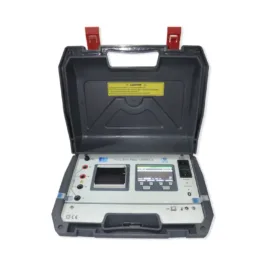
Introduction — When Milliohms Decide Megawatts
In electrical engineering, we often think big.
Big transformers.
Big switchgear.
Big cables.
Big currents.
But the truth is almost ironic.
Some of the largest electrical failures begin with the smallest numbers.
Not kilovolts.
Not megawatts.
Milliohms.
A loose bolted joint.
A slightly corroded contact.
A crimp that looks fine but isn’t.
These tiny imperfections quietly increase low resistance at connection points. At first, nothing happens. Systems run normally. No alarms. No trips.
Then heat builds.
Insulation weakens.
Contacts degrade.
And one day, a shutdown or fire reminds everyone that small resistances have big consequences.
That is exactly why Low Resistance (LR) testing exists.
And why precision-driven instruments from Motwane have become a trusted part of preventive maintenance programs across utilities, industries, and critical infrastructure.
Because when resistance is measured correctly, failures become predictable — and preventable.
Understanding the Concept — What is Low Resistance (LR) Testing and Why Does It Matter?
Let’s strip away jargon.
Low resistance testing simply answers one fundamental question:
“Is this electrical connection as good as it should be?”
Every joint, busbar, breaker contact, or cable lug must allow current to pass with minimal resistance.
If resistance increases:
- Heat rises (I²R losses)
- Energy wastes
- Equipment ages faster
- Fire risk increases
Even a few micro-ohms can create serious heating under high current.
A Simple analogy
Imagine water flowing through a pipe.
- Smooth pipe → easy flow
- Slight blockage → pressure builds
Electrical systems behave the same way.
Low resistance = smooth current flow
High resistance = stress and heat
LR testing finds those blockages before damage occurs.
The Hidden Danger of “Almost Good” Connections
Here’s the tricky part.
Most bad connections don’t look bad.
They look normal.
- Tight bolts
- Clean surfaces
- Proper alignment
Yet internally:
- Oxidation forms
- Contact pressure reduces
- Micro gaps appear
Standard multimeters cannot detect these changes. Their test currents are too small.
That’s why professional Low Resistance testers inject high test current.
Because only high current reveals real-world behavior.
This is where Motwane LR instruments shine.
They simulate actual load conditions, not lab conditions.
And that makes all the difference.
Technical Overview — How Low Resistance Testing Works
Let’s walk through the engineering logic.
The principle
Ohm’s Law:
R=VIR = \frac{V}{I}R=IV
Measure voltage drop while injecting known current → calculate resistance.
But here’s the key:
To measure very small resistance accurately, you must use:
Four-Wire (Kelvin) Method
This eliminates lead resistance errors.
Why 4-wire is critical
Two wires → carry current
Two wires → sense voltage
Result:
- No cable error
- No contact error
- High precision
- True measurement
Without Kelvin testing, readings are unreliable.
Professional LR testing always uses the 4-wire method.
Test current levels
Depending on application:
- 10 A
- 50 A
- 100 A
- 200 A
Higher current exposes hidden defects.
Motwane systems provide stable, controlled current injection for repeatable accuracy.
Standards followed
Reliable LR testing aligns with:
- IEC 62271
- IEEE C37
- IS standards
- NETA maintenance guidelines
These ensure consistency across industries.
Equipment Overview — Motwane Low Resistance Testers
Testing is only as good as the instrument you use.
In field environments, you need more than accuracy.
You need durability, simplicity, and speed.
Motwane designs its Low Resistance (LR) testers exactly for this reality.
Key features engineers appreciate
High current injection
Realistic simulation of operational stress
Kelvin 4-wire technique
True low resistance accuracy
Fast stabilization
Quick, stable readings
Portable design
Easy field mobility
Rugged enclosure
Handles harsh industrial environments
Digital display
Clear micro-ohm results
Data logging
Trend analysis over time
Safety protections
Overheat and overload safeguards
Why Motwane stands out
Motwane instruments are designed by people who understand field work:
- Less setup time
- Fewer measurement errors
- Faster testing cycles
- Long service life
It’s not just a tester.
It’s a practical tool built for technicians who work under real deadlines.
Practical Applications — Where LR Testing is Critical
Low resistance testing isn’t optional in many industries.
It’s essential.
Power utilities
- Circuit breaker contacts
- Busbars
- Earthing systems
Manufacturing plants
- Motor connections
- High-current panels
Railways & metros
- Traction systems
- Bonding verification
Data centers
- Critical switchgear
Oil & gas
- Hazardous zone reliability
Renewable energy
- Solar combiner boxes
- Wind turbine connections
Anywhere high current flows, LR testing protects assets.
Step-by-Step Guide — How to Perform LR Testing
Let’s make this practical.
Step 1 — De-energize equipment
Safety first. Lockout/tagout.
Step 2 — Clean contact points
Remove dust or corrosion
Step 3 — Connect Kelvin leads
Separate current and sense leads
Step 4 — Select current range
Based on equipment rating
Step 5 — Inject current
Wait for stable reading
Step 6 — Record resistance
Compare with baseline
Step 7 — Repeat for all connections
Simple process. Powerful insights.
Safety tips
- Never test energized circuits
- Use insulated gloves
- Avoid loose connections
- Ensure proper grounding
Testing is preventive — not risky.
Troubleshooting & Interpretation — Reading the Numbers Correctly
Numbers only help if interpreted correctly.
Normal readings
Stable and low
Slight increase
Possible early oxidation
Sudden spike
Loose or damaged contact
Fluctuating values
Poor lead connection or unstable contact
Common mistakes
- Dirty test probes
- Improper lead placement
- Using 2-wire method
- Ignoring temperature effects
Consistency is key.
Trend data over time is more powerful than a single reading.
Case Studies — Real-World Lessons
Case 1 — Substation breaker
Routine LR testing found 30% increase in resistance.
Contact replaced.
Potential outage avoided.
Savings: lakhs in downtime.
Case 2 — Factory busbar joint
No testing done.
Joint overheated.
Panel fire.
Production loss for 2 days.
Cost far exceeded testing investment.
Case 3 — Preventive program with Motwane LR tester
Monthly checks implemented.
Early fault detection improved reliability by 40%.
Maintenance costs dropped significantly.
Benefits & ROI — Why Management Should Invest
LR testing isn’t just technical.
It’s financial.
Benefits
- Reduced downtime
- Increased equipment life
- Lower energy losses
- Improved safety
- Compliance readiness
- Predictive maintenance
ROI reality
One prevented failure often pays for the instrument multiple times.
Testing is cheap.
Failures are expensive.
Future Trends — The Smart Era of LR Testing
Testing is becoming smarter.
Soon you’ll see:
- Bluetooth-enabled testers
- Cloud reporting
- Historical trend graphs
- AI-based diagnostics
- Integration with asset management software
Motwane is already moving toward smarter, connected testing solutions.
From measurement → to prediction → to prevention.
Conclusion — Small Measurements, Big Reliability
Low resistance testing may measure tiny values, but its impact is enormous.
A few micro-ohms today can become megawatt failures tomorrow.
That’s why smart engineers don’t wait for breakdowns.
They measure.
They monitor.
They prevent.
With reliable Low Resistance testing equipment from Motwane, maintenance becomes proactive, not reactive.
Because in electrical systems, precision isn’t optional.
It’s protection.
And protection starts with measuring what others ignore.


Comments
Post a Comment