Insulation Resistance 10KPI
Why Modern Electrical Reliability Begins with Deep Insulation Diagnostics — and Why Motwane 10KPI Testing Has Become the Industry Benchmark
In electrical engineering, most failures don’t happen dramatically.
They don’t explode.
They don’t spark loudly.
They don’t give warnings.
They quietly begin inside insulation.
Moisture creeps in.
Dust accumulates.
Thermal stress ages polymers.
Microscopic cracks develop.
Leakage current slowly increases.
Nothing looks wrong from the outside.
But internally, insulation is already weakening.
And by the time a breaker trips or a cable burns, the damage is done.
Production stops.
Maintenance scrambles.
Costs multiply.
The harsh reality is simple:
Insulation doesn’t fail suddenly. It deteriorates gradually.
And if you measure that deterioration early, you prevent failures entirely.
That’s where Insulation Resistance testing — and more specifically Motwane’s 10KPI insulation diagnostic approach — changes the game.
Because modern reliability isn’t about checking “pass or fail.”
It’s about understanding the complete health story of insulation.
This blog explores:
- What insulation resistance really means
- Why basic megger tests are no longer enough
- How 10KPI testing provides deeper insights
- How Motwane 10KPI instruments support predictive maintenance
- Where these tests save real money in the field
Let’s break it down like engineers do — practical, clear, and grounded in reality.
Introduction
What Is Insulation Resistance — and Why It Matters More Than Ever
Every electrical system depends on one invisible layer:
Insulation.
It separates:
- Conductors from earth
- Phase from phase
- Windings from core
- Energy from danger
Without healthy insulation:
- Leakage current rises
- Energy losses increase
- Shock risk appears
- Equipment overheats
- Unexpected shutdowns occur
Think of insulation like the walls of a dam.
If the walls are strong, everything flows safely.
If cracks appear, even small ones, the system slowly collapses.
Insulation Resistance testing simply asks:
“How well is the insulation preventing current leakage?”
Higher resistance = healthier insulation
Lower resistance = degradation starting
But here’s the catch.
Traditional single-value tests only give a snapshot.
Modern systems demand deeper diagnostics.
That’s why 10KPI testing exists.
From Basic Megger to 10KPI: The Evolution of Testing
Years ago, testing meant:
Apply 500V or 1000V
Wait 60 seconds
Note the value
Done
If the number looked “high enough,” equipment was declared healthy.
But experienced engineers know:
A single number hides too much information.
Because insulation behavior changes over time:
- Absorption
- Polarization
- Leakage
- Surface contamination
- Moisture migration
All affect readings differently.
Which means:
One number = incomplete story
This is where Motwane’s 10KPI methodology transforms insulation testing.
Instead of one reading, you evaluate multiple Key Performance Indicators (KPIs) that collectively reveal insulation condition.
It’s the difference between:
A thermometer
vs
A full medical report
Technical Overview
How Insulation Resistance Testing Actually Works
At its core, insulation resistance testing is straightforward.
A DC voltage is applied across insulation.
Leakage current is measured.
Using Ohm’s Law:
R = V / I
If leakage current is low → resistance high → insulation good
If leakage current is high → resistance low → insulation weak
But the physics behind insulation is more complex.
Because current isn’t just one type.
It includes:
1. Capacitive Charging Current
Initial surge, disappears quickly.
2. Absorption Current
Molecular alignment inside insulation.
3. Leakage Current
Actual defect-related current (the dangerous one)
Understanding how these currents behave over time reveals true insulation health.
That’s why time-based testing is powerful.
Key Insulation Tests Explained
Spot Test
Single reading after 60 seconds
Quick but limited
DAR (Dielectric Absorption Ratio)
60 sec / 30 sec
Shows absorption behavior
PI (Polarization Index)
10 min / 1 min
Indicates contamination or moisture
Step Voltage Test
Increasing voltage levels
Reveals weak spots
Ramp Test
Gradual stress increase
Detects breakdown trends
And then…
10KPI Testing
This combines multiple measurements into one comprehensive diagnostic framework.
Instead of guessing, you analyze patterns.
What Is 10KPI Testing?
10KPI stands for 10 Key Performance Indicators.
It evaluates insulation health across multiple parameters rather than relying on one resistance value.
Typical KPIs include:
- IR value
- DAR
- PI
- Leakage current trend
- Capacitance
- Charging time
- Step voltage behavior
- Surface condition indication
- Temperature correction
- Time stability
Together, these give engineers a complete diagnostic profile.
This approach turns testing into:
Predictive maintenance instead of reactive repair.
And this is exactly what Motwane 10KPI instruments are designed to deliver.
Equipment Overview
Motwane 10KPI Insulation Resistance Testers — Built for Real-World Engineering
Testing inside a lab is easy.
Testing inside a substation yard at 45°C heat, dust, and limited shutdown time is not.
Field engineers don’t want fragile tools.
They want instruments that:
- Start quickly
- Work reliably
- Give accurate readings
- Save time
- Survive rough handling
Motwane designs equipment specifically for these realities.
Core Advantages of Motwane 10KPI Instruments
High Test Voltage Capability
Up to 10kV for HV systems
Stable DC Output
Consistent voltage ensures reliable results
Multi-KPI Automatic Analysis
Instant DAR, PI, and 10KPI results
Large Display
Clear readings even outdoors
Data Logging
Trend analysis over months/years
Rugged Construction
Industrial-grade durability
Battery Powered
Field-ready, no dependency on mains
Safety Interlocks
Protects operator and equipment
Simply put:
These are tools made by people who understand substations — not marketing teams.
Practical Applications
Where 10KPI Testing Makes a Real Difference
Let’s talk real-world impact.
Power Cables
Underground and long-distance cables face:
- Moisture ingress
- Aging
- Mechanical stress
Failure means:
Costly digging
Extended downtime
10KPI testing detects early deterioration long before breakdown.
Transformers
Oil and insulation degrade slowly.
10KPI helps monitor:
- Moisture contamination
- Winding insulation health
- Aging trends
Prevents expensive transformer failures.
Motors & Generators
Thermal cycling weakens winding insulation.
Testing during shutdown ensures:
- Reliable startup
- Reduced unexpected trips
Switchgear & Panels
Surface tracking and contamination cause leakage.
10KPI quickly identifies unsafe conditions.
Renewable Plants
Solar and wind farms rely on long cable networks.
Insulation testing ensures:
Efficiency + safety + uptime.
Why Engineers Prefer 10KPI Over Traditional IR Testing
Because it answers deeper questions:
Not just:
“Is it okay?”
But:
“How healthy is it?”
“Is it degrading?”
“Will it last another year?”
“When should we schedule maintenance?”
That’s strategic thinking.
And decision-makers care about:
Predictability.
Not surprises.
Financial Impact
One failed transformer = lakhs lost
One day downtime = production loss
One accident = safety risk
But one 10KPI test takes minutes.
Cost comparison isn’t even close.
Preventive testing always wins.
Step-by-Step Field Testing Process
- Isolate equipment
- Discharge completely
- Connect tester
- Select 10KPI mode
- Run automated sequence
- Record data
- Compare trends
Simple. Fast. Reliable.
Case Example
A utility substation used Motwane 10KPI testing annually.
Trend showed gradual PI drop.
Maintenance team scheduled cleaning and drying.
Result:
Avoided complete insulation failure.
Saved weeks of downtime.
That’s the power of early insight.
The Motwane Difference
What sets Motwane apart isn’t just instruments.
It’s understanding.
Understanding Indian field conditions.
Understanding engineers’ challenges.
Understanding that testing must be:
Fast
Accurate
Practical
Reliable
Motwane doesn’t just sell testers.
They enable smarter maintenance culture.
Conclusion
Smarter Testing. Safer Systems. Stronger Reliability.
Electrical systems don’t fail overnight.
They give warnings.
If you measure correctly, you see them early.
Insulation Resistance testing is no longer about a single megohm number.
It’s about deeper diagnostics.
It’s about trends.
It’s about intelligence.
And with Motwane 10KPI insulation resistance instruments, you move from:
Reactive firefighting
to
Predictive reliability.
Measure more.
Understand more.
Prevent more.
Because the best failure…
Is the one that never happens.Insulation Resistance 10KPI
Why Modern Electrical Reliability Begins with Deep Insulation Diagnostics — and Why Motwane 10KPI Testing Has Become the Industry Benchmark
In electrical engineering, most failures don’t happen dramatically.
They don’t explode.
They don’t spark loudly.
They don’t give warnings.
They quietly begin inside insulation.
Moisture creeps in.
Dust accumulates.
Thermal stress ages polymers.
Microscopic cracks develop.
Leakage current slowly increases.
Nothing looks wrong from the outside.
But internally, insulation is already weakening.
And by the time a breaker trips or a cable burns, the damage is done.
Production stops.
Maintenance scrambles.
Costs multiply.
The harsh reality is simple:
Insulation doesn’t fail suddenly. It deteriorates gradually.
And if you measure that deterioration early, you prevent failures entirely.
That’s where Insulation Resistance testing — and more specifically Motwane’s 10KPI insulation diagnostic approach — changes the game.
Because modern reliability isn’t about checking “pass or fail.”
It’s about understanding the complete health story of insulation.
This blog explores:
- What insulation resistance really means
- Why basic megger tests are no longer enough
- How 10KPI testing provides deeper insights
- How Motwane 10KPI instruments support predictive maintenance
- Where these tests save real money in the field
Let’s break it down like engineers do — practical, clear, and grounded in reality.
Introduction
What Is Insulation Resistance — and Why It Matters More Than Ever
Every electrical system depends on one invisible layer:
Insulation.
It separates:
- Conductors from earth
- Phase from phase
- Windings from core
- Energy from danger
Without healthy insulation:
- Leakage current rises
- Energy losses increase
- Shock risk appears
- Equipment overheats
- Unexpected shutdowns occur
Think of insulation like the walls of a dam.
If the walls are strong, everything flows safely.
If cracks appear, even small ones, the system slowly collapses.
Insulation Resistance testing simply asks:
“How well is the insulation preventing current leakage?”
Higher resistance = healthier insulation
Lower resistance = degradation starting
But here’s the catch.
Traditional single-value tests only give a snapshot.
Modern systems demand deeper diagnostics.
That’s why 10KPI testing exists.
From Basic Megger to 10KPI: The Evolution of Testing
Years ago, testing meant:
Apply 500V or 1000V
Wait 60 seconds
Note the value
Done
If the number looked “high enough,” equipment was declared healthy.
But experienced engineers know:
A single number hides too much information.
Because insulation behavior changes over time:
- Absorption
- Polarization
- Leakage
- Surface contamination
- Moisture migration
All affect readings differently.
Which means:
One number = incomplete story
This is where Motwane’s 10KPI methodology transforms insulation testing.
Instead of one reading, you evaluate multiple Key Performance Indicators (KPIs) that collectively reveal insulation condition.
It’s the difference between:
A thermometer
vs
A full medical report
Technical Overview
How Insulation Resistance Testing Actually Works
At its core, insulation resistance testing is straightforward.
A DC voltage is applied across insulation.
Leakage current is measured.
Using Ohm’s Law:
R = V / I
If leakage current is low → resistance high → insulation good
If leakage current is high → resistance low → insulation weak
But the physics behind insulation is more complex.
Because current isn’t just one type.
It includes:
1. Capacitive Charging Current
Initial surge, disappears quickly.
2. Absorption Current
Molecular alignment inside insulation.
3. Leakage Current
Actual defect-related current (the dangerous one)
Understanding how these currents behave over time reveals true insulation health.
That’s why time-based testing is powerful.
Key Insulation Tests Explained
Spot Test
Single reading after 60 seconds
Quick but limited
DAR (Dielectric Absorption Ratio)
60 sec / 30 sec
Shows absorption behavior
PI (Polarization Index)
10 min / 1 min
Indicates contamination or moisture
Step Voltage Test
Increasing voltage levels
Reveals weak spots
Ramp Test
Gradual stress increase
Detects breakdown trends
And then…
10KPI Testing
This combines multiple measurements into one comprehensive diagnostic framework.
Instead of guessing, you analyze patterns.
What Is 10KPI Testing?
10KPI stands for 10 Key Performance Indicators.
It evaluates insulation health across multiple parameters rather than relying on one resistance value.
Typical KPIs include:
- IR value
- DAR
- PI
- Leakage current trend
- Capacitance
- Charging time
- Step voltage behavior
- Surface condition indication
- Temperature correction
- Time stability
Together, these give engineers a complete diagnostic profile.
This approach turns testing into:
Predictive maintenance instead of reactive repair.
And this is exactly what Motwane 10KPI instruments are designed to deliver.
Equipment Overview
Motwane 10KPI Insulation Resistance Testers — Built for Real-World Engineering
Testing inside a lab is easy.
Testing inside a substation yard at 45°C heat, dust, and limited shutdown time is not.
Field engineers don’t want fragile tools.
They want instruments that:
- Start quickly
- Work reliably
- Give accurate readings
- Save time
- Survive rough handling
Motwane designs equipment specifically for these realities.
Core Advantages of Motwane 10KPI Instruments
High Test Voltage Capability
Up to 10kV for HV systems
Stable DC Output
Consistent voltage ensures reliable results
Multi-KPI Automatic Analysis
Instant DAR, PI, and 10KPI results
Large Display
Clear readings even outdoors
Data Logging
Trend analysis over months/years
Rugged Construction
Industrial-grade durability
Battery Powered
Field-ready, no dependency on mains
Safety Interlocks
Protects operator and equipment
Simply put:
These are tools made by people who understand substations — not marketing teams.
Practical Applications
Where 10KPI Testing Makes a Real Difference
Let’s talk real-world impact.
Power Cables
Underground and long-distance cables face:
- Moisture ingress
- Aging
- Mechanical stress
Failure means:
Costly digging
Extended downtime
10KPI testing detects early deterioration long before breakdown.
Transformers
Oil and insulation degrade slowly.
10KPI helps monitor:
- Moisture contamination
- Winding insulation health
- Aging trends
Prevents expensive transformer failures.
Motors & Generators
Thermal cycling weakens winding insulation.
Testing during shutdown ensures:
- Reliable startup
- Reduced unexpected trips
Switchgear & Panels
Surface tracking and contamination cause leakage.
10KPI quickly identifies unsafe conditions.
Renewable Plants
Solar and wind farms rely on long cable networks.
Insulation testing ensures:
Efficiency + safety + uptime.
Why Engineers Prefer 10KPI Over Traditional IR Testing
Because it answers deeper questions:
Not just:
“Is it okay?”
But:
“How healthy is it?”
“Is it degrading?”
“Will it last another year?”
“When should we schedule maintenance?”
That’s strategic thinking.
And decision-makers care about:
Predictability.
Not surprises.
Financial Impact
One failed transformer = lakhs lost
One day downtime = production loss
One accident = safety risk
But one 10KPI test takes minutes.
Cost comparison isn’t even close.
Preventive testing always wins.
Step-by-Step Field Testing Process
- Isolate equipment
- Discharge completely
- Connect tester
- Select 10KPI mode
- Run automated sequence
- Record data
- Compare trends
Simple. Fast. Reliable.
Case Example
A utility substation used Motwane 10KPI testing annually.
Trend showed gradual PI drop.
Maintenance team scheduled cleaning and drying.
Result:
Avoided complete insulation failure.
Saved weeks of downtime.
That’s the power of early insight.
The Motwane Difference
What sets Motwane apart isn’t just instruments.
It’s understanding.
Understanding Indian field conditions.
Understanding engineers’ challenges.
Understanding that testing must be:
Fast
Accurate
Practical
Reliable
Motwane doesn’t just sell testers.
They enable smarter maintenance culture.
Conclusion
Smarter Testing. Safer Systems. Stronger Reliability.
Electrical systems don’t fail overnight.
They give warnings.
If you measure correctly, you see them early.
Insulation Resistance testing is no longer about a single megohm number.
It’s about deeper diagnostics.
It’s about trends.
It’s about intelligence.
And with Motwane 10KPI insulation resistance instruments, you move from:
Reactive firefighting
to
Predictive reliability.
Measure more.
Understand more.
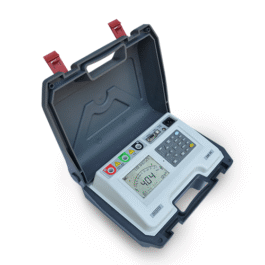
Prevent more.10K-PI Insulation Diagnostic TesterBecause the best failure…
Is the one that never happens.
In electrical engineering, most failures don’t happen dramatically.
They don’t explode.
They don’t spark loudly.
They don’t give warnings.
They quietly begin inside insulation.
Moisture creeps in.
Dust accumulates.
Thermal stress ages polymers.
Microscopic cracks develop.
Leakage current slowly increases.
Nothing looks wrong from the outside.
But internally, insulation is already weakening.
And by the time a breaker trips or a cable burns, the damage is done.
Production stops.
Maintenance scrambles.
Costs multiply.
The harsh reality is simple:
Insulation doesn’t fail suddenly. It deteriorates gradually.
And if you measure that deterioration early, you prevent failures entirely.
That’s where Insulation Resistance testing — and more specifically Motwane’s 10KPI insulation diagnostic approach — changes the game.
Because modern reliability isn’t about checking “pass or fail.”
It’s about understanding the complete health story of insulation.
This blog explores:
- What insulation resistance really means
- Why basic megger tests are no longer enough
- How 10KPI testing provides deeper insights
- How Motwane 10KPI instruments support predictive maintenance
- Where these tests save real money in the field
Let’s break it down like engineers do — practical, clear, and grounded in reality.
Introduction
What Is Insulation Resistance — and Why It Matters More Than Ever
Every electrical system depends on one invisible layer:
Insulation.
It separates:
- Conductors from earth
- Phase from phase
- Windings from core
- Energy from danger
Without healthy insulation:
- Leakage current rises
- Energy losses increase
- Shock risk appears
- Equipment overheats
- Unexpected shutdowns occur
Think of insulation like the walls of a dam.
If the walls are strong, everything flows safely.
If cracks appear, even small ones, the system slowly collapses.
Insulation Resistance testing simply asks:
“How well is the insulation preventing current leakage?”
Higher resistance = healthier insulation
Lower resistance = degradation starting
But here’s the catch.
Traditional single-value tests only give a snapshot.
Modern systems demand deeper diagnostics.
That’s why 10KPI testing exists.
From Basic Megger to 10KPI: The Evolution of Testing
Years ago, testing meant:
Apply 500V or 1000V
Wait 60 seconds
Note the value
Done
If the number looked “high enough,” equipment was declared healthy.
But experienced engineers know:
A single number hides too much information.
Because insulation behavior changes over time:
- Absorption
- Polarization
- Leakage
- Surface contamination
- Moisture migration
All affect readings differently.
Which means:
One number = incomplete story
This is where Motwane’s 10KPI methodology transforms insulation testing.
Instead of one reading, you evaluate multiple Key Performance Indicators (KPIs) that collectively reveal insulation condition.
It’s the difference between:
A thermometer
vs
A full medical report
Technical Overview
How Insulation Resistance Testing Actually Works
At its core, insulation resistance testing is straightforward.
A DC voltage is applied across insulation.
Leakage current is measured.
Using Ohm’s Law:
R = V / I
If leakage current is low → resistance high → insulation good
If leakage current is high → resistance low → insulation weak
But the physics behind insulation is more complex.
Because current isn’t just one type.
It includes:
1. Capacitive Charging Current
Initial surge, disappears quickly.
2. Absorption Current
Molecular alignment inside insulation.
3. Leakage Current
Actual defect-related current (the dangerous one)
Understanding how these currents behave over time reveals true insulation health.
That’s why time-based testing is powerful.
Key Insulation Tests Explained
Spot Test
Single reading after 60 seconds
Quick but limited
DAR (Dielectric Absorption Ratio)
60 sec / 30 sec
Shows absorption behavior
PI (Polarization Index)
10 min / 1 min
Indicates contamination or moisture
Step Voltage Test
Increasing voltage levels
Reveals weak spots
Ramp Test
Gradual stress increase
Detects breakdown trends
And then…
10KPI Testing
This combines multiple measurements into one comprehensive diagnostic framework.
Instead of guessing, you analyze patterns.
What Is 10KPI Testing?
10KPI stands for 10 Key Performance Indicators.
It evaluates insulation health across multiple parameters rather than relying on one resistance value.
Typical KPIs include:
- IR value
- DAR
- PI
- Leakage current trend
- Capacitance
- Charging time
- Step voltage behavior
- Surface condition indication
- Temperature correction
- Time stability
Together, these give engineers a complete diagnostic profile.
This approach turns testing into:
Predictive maintenance instead of reactive repair.
And this is exactly what Motwane 10KPI instruments are designed to deliver.
Equipment Overview
Motwane 10KPI Insulation Resistance Testers — Built for Real-World Engineering
Testing inside a lab is easy.
Testing inside a substation yard at 45°C heat, dust, and limited shutdown time is not.
Field engineers don’t want fragile tools.
They want instruments that:
- Start quickly
- Work reliably
- Give accurate readings
- Save time
- Survive rough handling
Motwane designs equipment specifically for these realities.
Core Advantages of Motwane 10KPI Instruments
High Test Voltage Capability
Up to 10kV for HV systems
Stable DC Output
Consistent voltage ensures reliable results
Multi-KPI Automatic Analysis
Instant DAR, PI, and 10KPI results
Large Display
Clear readings even outdoors
Data Logging
Trend analysis over months/years
Rugged Construction
Industrial-grade durability
Battery Powered
Field-ready, no dependency on mains
Safety Interlocks
Protects operator and equipment
Simply put:
These are tools made by people who understand substations — not marketing teams.
Practical Applications
Where 10KPI Testing Makes a Real Difference
Let’s talk real-world impact.
Power Cables
Underground and long-distance cables face:
- Moisture ingress
- Aging
- Mechanical stress
Failure means:
Costly digging
Extended downtime
10KPI testing detects early deterioration long before breakdown.
Transformers
Oil and insulation degrade slowly.
10KPI helps monitor:
- Moisture contamination
- Winding insulation health
- Aging trends
Prevents expensive transformer failures.
Motors & Generators
Thermal cycling weakens winding insulation.
Testing during shutdown ensures:
- Reliable startup
- Reduced unexpected trips
Switchgear & Panels
Surface tracking and contamination cause leakage.
10KPI quickly identifies unsafe conditions.
Renewable Plants
Solar and wind farms rely on long cable networks.
Insulation testing ensures:
Efficiency + safety + uptime.
Why Engineers Prefer 10KPI Over Traditional IR Testing
Because it answers deeper questions:
Not just:
“Is it okay?”
But:
“How healthy is it?”
“Is it degrading?”
“Will it last another year?”
“When should we schedule maintenance?”
That’s strategic thinking.
And decision-makers care about:
Predictability.
Not surprises.
Financial Impact
One failed transformer = lakhs lost
One day downtime = production loss
One accident = safety risk
But one 10KPI test takes minutes.
Cost comparison isn’t even close.
Preventive testing always wins.
Step-by-Step Field Testing Process
- Isolate equipment
- Discharge completely
- Connect tester
- Select 10KPI mode
- Run automated sequence
- Record data
- Compare trends
Simple. Fast. Reliable.
Case Example
A utility substation used Motwane 10KPI testing annually.
Trend showed gradual PI drop.
Maintenance team scheduled cleaning and drying.
Result:
Avoided complete insulation failure.
Saved weeks of downtime.
That’s the power of early insight.
The Motwane Difference
What sets Motwane apart isn’t just instruments.
It’s understanding.
Understanding Indian field conditions.
Understanding engineers’ challenges.
Understanding that testing must be:
Fast
Accurate
Practical
Reliable
Motwane doesn’t just sell testers.
They enable smarter maintenance culture.
Conclusion
Smarter Testing. Safer Systems. Stronger Reliability.
Electrical systems don’t fail overnight.
They give warnings.
If you measure correctly, you see them early.
Insulation Resistance testing is no longer about a single megohm number.
It’s about deeper diagnostics.
It’s about trends.
It’s about intelligence.
And with Motwane 10KPI insulation resistance instruments, you move from:
Reactive firefighting
to
Predictive reliability.
Measure more.
Understand more.
Prevent more.
Because the best failure…
Is the one that never happens.


Comments
Post a Comment