INSULATION RESISTANCE 10KPI
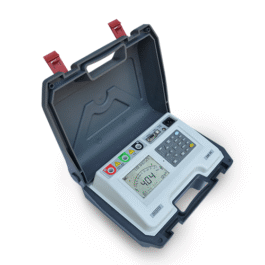
When Standard Testing Is No Longer Enough for High-Voltage Electrical Systems
There comes a stage in every serious electrical installation where routine testing stops being sufficient.
Motors get larger.
Voltages climb higher.
Downtime becomes unacceptable.
Failures become catastrophic rather than inconvenient.
At that level, engineers stop asking,
“Is the insulation okay right now?”
They start asking,
“Will this insulation survive real operating stress?”
That is exactly where Insulation Resistance 10KPI testing enters the picture.
Not as a routine check.
Not as a regulatory formality.
But as a deep diagnostic tool for high-voltage systems where failure is not an option.
For decades, Motwane has built insulation resistance testers for engineers who operate in this reality — where accuracy, repeatability, and confidence matter more than convenience.
This blog explores 10KPI testing from a practical, field-driven perspective — why it exists, how it works, where it is essential, and why it has become a non-negotiable test in modern high-voltage environments.
Introduction: What Makes 10KPI Different — and Why It Matters
Most insulation failures do not happen suddenly.
They develop quietly.
- Microscopic cracks in insulation
- Moisture ingress into winding insulation
- Thermal aging from overloads
- Chemical contamination in harsh environments
At lower test voltages, these weaknesses often remain hidden.
A 5KPI test may still show acceptable values.
A routine insulation resistance test may pass comfortably.
But once the system is energized at full operating voltage, the same insulation can collapse.
10KPI testing exists to close this gap.
It pushes insulation closer to real operating stress and observes how it behaves over time, not just at a single moment.
In practical terms, 10KPI testing answers one critical question:
Can this insulation survive sustained high-voltage stress without deteriorating?
For engineers responsible for generators, EHV cables, large transformers, and critical infrastructure, that answer defines whether equipment is energized — or kept offline.
Understanding the Core Idea Behind 10KPI Testing
At its heart, 10KPI testing is about behavior, not just numbers.
Traditional insulation resistance testing gives you a snapshot.
10KPI gives you a story.
What Happens When 10 kV Is Applied?
When a high DC voltage such as 10 kV is applied to insulation, several things happen internally:
- Capacitive charging current appears immediately
- Absorption current flows as insulation molecules align
- Leakage current reveals defects, contamination, and aging
Healthy insulation shows:
- Rapid decay of charging current
- Gradual reduction of absorption current
- Very low and stable leakage current
Weak insulation shows:
- Persistent current flow
- Poor resistance growth over time
- Unstable or declining readings
10KPI captures this time-based response, which is why it is far more meaningful than a single resistance value.
Technical Overview: How 10KPI Testing Works
What Is Polarization Index (PI)?
Polarization Index is the ratio between insulation resistance measured at two different times, typically:
- Resistance at 10 minutes
- Divided by resistance at 1 minute
This ratio shows whether insulation is improving under voltage stress or breaking down.
With 10KPI testing, this measurement is performed at a 10 kV DC test voltage, which significantly increases diagnostic sensitivity.
Why 10 kV Matters
Higher voltage testing exposes:
- Surface leakage paths
- Moisture pockets
- Weak insulation layer
- Manufacturing defects
- Thermal and chemical aging
Many insulation systems appear healthy at lower voltages but fail under higher stress.
10KPI testing brings these weaknesses to the surface before failure occurs.
Applicable Standards and Practices
10KPI testing aligns with internationally accepted practices such as:
- IEEE guidelines for insulation testing
- IEC recommendations for high-voltage equipment
- OEM maintenance protocols for generators and transformers
While exact acceptance criteria depend on equipment type, trending over time is universally recognized as the most reliable indicator of insulation health.
Equipment Overview: Motwane 10KPI Insulation Resistance Testers
High-voltage testing is unforgiving.
Any instability in output, noise in measurement, or user error can distort results — or compromise safety.
This is where Motwane 10KPI insulation resistance testers stand apart.
They are designed for field reality, not laboratory perfection.
Key Features That Matter in Real Conditions
Stable 10 kV Output
Consistent voltage application ensures repeatable and reliable results.
Automatic PI Measurement
No manual timing or calculations — the instrument does the work.
High Measurement Resolution
Accurate readings even at very high resistance values.
Strong Safety Architecture
Automatic discharge, overload protection, and operator safety interlocks.
Rugged Construction
Built to survive substations, plants, and harsh industrial environments.
Clear Display & Simple Interface
Engineers should focus on results, not menus.
Motwane’s approach is simple:
If an instrument cannot be trusted in the field, it does not belong there.
Practical Applications: Where 10KPI Testing Is Critical
10KPI testing is not required everywhere — and that is exactly why it is valuable.
It is reserved for high-risk, high-value, high-voltage systems.
1. Large Generators
Generator insulation operates under extreme electrical and thermal stress.
10KPI testing helps detect:
- Insulation aging
- Moisture absorption during shutdowns
- Weak turn-to-turn insulation
For generators, one insulation failure can mean months of downtime.
2. Power Transformers
Transformers represent massive capital investment.
10KPI testing provides insight into
- Insulation paper condition
- Moisture ingress
- Long-term aging trends
It supports condition-based maintenance rather than reactive replacement.
3. Extra-High Voltage Cables
EHV cables are difficult and expensive to repair.
10KPI testing identifies:
- Insulation deterioration
- Manufacturing or installation defects
- Moisture-related issues
Failures here are disruptive and costly — prevention is essential.
4. Critical Industrial Motors
High-voltage motors driving compressors, pumps, or mills cannot afford unexpected failure.
10KPI testing ensures insulation integrity before startup and after overhauls.
5. Utilities and Grid Infrastructure
For utilities, insulation failure is not just an equipment issue — it’s a reliability issue.
10KPI testing supports:
- Grid stability
- Preventive maintenance programs
- Asset life extension strategies
Step-by-Step: How Engineers Perform 10KPI Testing in the Field
This is not a textbook process — it’s how experienced engineers actually do it.
- Isolate and lock out equipment
Safety is non-negotiable - Ensure complete discharge
Residual charge can distort readings and create hazards. - Clean insulation surfaces
Dirt and moisture affect leakage paths. - Connect Motwane 10KPI tester securely
Poor connections ruin good data. - Select 10 kV test voltage
Confirm settings before starting. - Run test for full duration
Watch behavior, not just final value. - Record and trend results
Comparison over time is key. - Allow automatic discharge
Never rush post-test handling.
Interpreting Results: What the Numbers Really Mean
Experienced engineers don’t panic over a single low value.
They look for patterns.
Healthy Insulation
- Resistance increases steadily
- PI values comfortably above minimum thresholds
- Stable readings across tests
Warning Signs
- PI trending downward over months
- Resistance growth slowing
- Increased leakage current
Critical Condition
- Low PI at 10 kV
- Unstable readings
- Sharp drop compared to previous tests
10KPI testing turns insulation maintenance from guesswork into decision-making.
Case Insight: When 10KPI Prevented a Major Failure
A high-voltage generator passed routine insulation resistance tests.
A 5KPI test showed marginal but acceptable results.
A 10KPI test, however, revealed poor PI behavior under sustained stress.
Further inspection found moisture ingress deep within the insulation system.
Drying and corrective action prevented what would have been a catastrophic failure during peak operation.
That single test justified the entire maintenance program.
Business Impact: Why Management Should Care About 10KPI
From a business perspective, 10KPI testing delivers:
- Reduced unplanned outages
- Longer equipment life
- Predictable maintenance costs
- Improved safety compliance
- Better asset utilization
One avoided transformer or generator failure can justify multiple Motwane 10KPI testers.
This is not an expense — it is risk control.
Looking Ahead: The Future of High-Voltage Insulation Testing
10KPI testing is increasingly becoming part of:
- Predictive maintenance systems
- Digital asset management platforms
- Long-term reliability programs
As plants move toward data-driven maintenance, high-quality insulation data becomes invaluable.
Motwane continues to evolve its instruments to support this future — without sacrificing reliability in the present.
Conclusion: 10KPI Testing Is a Decision Tool, Not Just a Test
In high-voltage systems, insulation failure is never minor.
It is expensive, dangerous, and disruptive.
Insulation Resistance 10KPI testing exists because some equipment deserves more than basic checks.
With Motwane 10KPI insulation resistance testers, engineers gain clarity — not assumptions.
They energize equipment with confidence, not hope.
And in modern electrical systems, that confidence is everything.


Comments
Post a Comment