Beyond Insulation: Why Low Resistance Testing Is the Hidden Backbone of Electrical Reliability
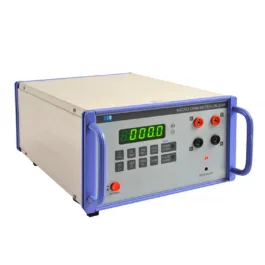
A Practical Guide for Engineers Who Can’t Afford Downtime — Powered by Motwane
When engineers talk about electrical health, the conversation almost always starts with insulation.
“How’s the insulation resistance?”
“What’s the megger reading?”
“Is the cable leaking current?”
Insulation resistance has become the default language of safety.
And rightly so — poor insulation can shut down an entire system.
But here’s a hard truth most plants learn only after a costly breakdown:
Many electrical failures happen even when insulation is perfectly fine.
The cables are healthy.
The windings are dry.
The megger shows excellent values.
Yet something still burns.
Something still overheats.
Something still trips.
Why?
Because electricity doesn’t fail only when resistance is too high to ground.
It also fails when resistance is too high in the current path.
That’s the side we rarely talk about.
That’s where low resistance testing lives.
If insulation resistance protects you from leakage,
low resistance protects you from losses.
And losses quietly kill reliability.
This is why modern maintenance teams are treating low resistance testing with the same seriousness as insulation resistance testing — and why companies across industries rely on Motwane low resistance testers to keep their systems efficient, safe, and predictable.
Introduction: Two Sides of the Same Coin
Think of any electrical system as having two responsibilities:
- Keep current where it should flow
- Prevent current from flowing where it shouldn’t
Insulation resistance handles the second job.
Low resistance handles the first.
Both are equally important.
But here’s the problem:
Most plants only measure one side.
It’s like checking for water leaks in a pipe but never checking for blockages inside.
Eventually, something bursts.
Low resistance testing answers a simple but powerful question:
“Is the current flowing freely and efficiently through every connection?”
If the answer is no, heat starts building.
And heat is the silent enemy of every electrical asset.
Technical Overview: What Exactly Is Low Resistance Testing?
At its core, low resistance testing measures the opposition to current flow in:
- conductors
- joints
- contacts
- busbars
- windings
- grounding paths
But we’re not talking about ohms.
We’re talking about:
- milliohms
- micro-ohms
Tiny numbers.
So small that ordinary meters cannot measure them accurately.
Yet these tiny numbers have massive consequences.
Why Small Resistance Matters So Much
Let’s use a simple example.
Imagine a busbar carrying 500A.
If resistance increases by just 1 milliohm:
Power loss = I²R
= 50⁰² × 0.001
= 250 watts
That’s like attaching a small heater inside your panel.
Continuously.
24/7.
Now imagine several such joints.
This is how:
- insulation melts
- contacts pit
- breakers fail
- fires start
All from a resistance increase too small to notice without a proper low resistance tester.
The Kelvin (4-Wire) Principle
Professional testers — including those from Motwane — use a 4-wire technique:
- Two leads inject current
- Two leads sense voltage
This eliminates test lead resistance and gives precise readings.
Without this method, measurements are unreliable.
Which means decisions become guesses.
And maintenance should never be guesswork.
Equipment Overview: Why Motwane Low Resistance Testers Make a Difference
Here’s something every field engineer knows:
Testing is easy in theory.
Testing in a substation at 2 PM in 45°C heat is something else.
Instruments must survive:
- dust
- vibration
- long cables
- unstable supply
- rough handling
Lab-grade tools don’t last here.
That’s where Motwane’s low resistance testers stand apart.
They’re designed for real industrial life.
Practical Advantages Engineers Notice Immediately
✔ High current injection for stable readings
✔ Micro-ohm resolution
✔ Fast measurement cycles
✔ Portable yet rugged build
✔ Clear digital interface
✔ Data storage for reports
✔ Reliable in outdoor conditions
But what really matters is trust.
When a Motwane tester shows 85 µΩ, you believe it.
And that confidence changes how decisions are made.
Practical Applications: Where Low Resistance + Insulation Resistance Work Together
Instead of treating tests separately, smart teams combine them.
Because together they reveal the full picture.
Transformers
- Insulation resistance → insulation health
- Low resistance → winding integrity
Together → complete transformer assessment
Switchgear
- Insulation → leakage prevention
- Low resistance → contact performance
Together → safe switching
Earthing Systems
- Insulation → isolation
- Low resistance → fault current path
Together → safety compliance
Motors
- Insulation → winding protection
- Low resistance → copper continuity
Together → reliability
If you only test insulation, you see half the story.
Low resistance fills the missing half.
Step-by-Step Guide: A Practical Field Routine
Here’s how experienced technicians perform low resistance testing efficiently.
Step 1 — Isolate and discharge
Safety first, always.
Step 2 — Clean the contact surfaces
Oxide layers distort readings.
Step 3 — Use Kelvin clamps
Separate current and sense leads.
Step 4 — Select appropriate current
Higher current improves accuracy.
Step 5 — Record baseline values
Create reference for future tests.
Step 6 — Compare similar phases
Identify abnormal differences.
Step 7 — Trend over time
Trending predicts failure early.
Field Tip
Don’t rely on single readings.
Patterns tell the real story.
Troubleshooting & Interpretation: Reading Between the Numbers
Numbers alone don’t fix problems.
Interpretation does.
Stable low value
Healthy joint
Slowly increasing value
Aging or corrosion
Sudden jump
Loose or damaged contact
Fluctuating readings
Bad probe connection
Unequal phases
Internal fault suspected
Think like a detective.
Your tester gives clues.
Your job is to connect them.
Real-World Stories: Lessons from the Field
Case 1 — The Hot Panel Mystery
Insulation was perfect.
But one busbar joint showed double resistance.
Tightened → temperature dropped → avoided shutdown.
Case 2 — Transformer That “Looked Fine”
Megger readings were excellent.
Low resistance showed winding imbalance.
Internal defect found early.
Saved lakhs in repair cost.
Case 3 — Motor That Kept Tripping
Cause wasn’t insulation.
High contact resistance in starter.
Replaced → problem solved.
Each story proves the same thing:
Low resistance testing finds what insulation tests cannot.
Benefits & ROI: Why Management Should Care
Let’s talk money.
Low resistance testing helps:
- reduce downtime
- extend equipment life
- avoid emergency repairs
- improve energy efficiency
- enhance safety
Even one prevented shutdown can save:
- hours of lost production
- labour cost
- replacement cost
Compared to that, a Motwane low resistance tester is a tiny investment.
Future Trends: Smarter Electrical Health Monitoring
The future isn’t just testing.
It’s intelligent testing.
We’re moving toward:
- automated test logs
- cloud-based reporting
- digital maintenance history
- predictive analytics
- smart testers integrated with SCADA
Motwane is already aligning with this shift.
Because tomorrow’s maintenance isn’t reactive.
It’s predictive.
Conclusion: Reliability Is Built on Small Details
Electrical systems don’t fail dramatically overnight.
They fail gradually.
A little heat here.
A little loss there.
A tiny resistance increase somewhere.
Small issues add up.
Low resistance testing is how we catch those issues early.
Insulation resistance keeps current contained.
Low resistance ensures current flows smoothly.
Together, they form the foundation of electrical reliability.
And with dependable tools like Motwane low resistance testers, engineers don’t just measure numbers — they protect uptime, safety, and profits.
Because in modern industry, precision isn’t optional.
It’s survival.


Comments
Post a Comment