10KPI Test Set
The 10 kV Insulation Diagnostic That Protects High Value Electrical Assets
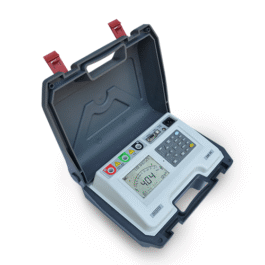
Every high voltage asset in your facility carries a silent risk.
Not overload.
Not short circuit.
Not mechanical wear.
Insulation breakdown.
When insulation fails in high voltage equipment, the damage is rarely minor. It can mean burnt windings, cable flashovers, generator shutdowns, or extended plant outages. The troubling part is this: insulation deterioration often develops long before visible warning signs appear.
That is where 10KPI testing becomes indispensable.
The 10KPI Test Set applies a controlled 10 kilovolt DC voltage to insulation systems and measures how that insulation responds over time. It does more than provide a resistance number. It reveals insulation behavior under electrical stress.
For engineers responsible for reliability and plant managers focused on uptime, 10KPI testing is not simply maintenance. It is risk management grounded in measurable data.
Introduction
Understanding 10KPI and Why It Matters
10KPI stands for 10 kilovolt Polarization Index testing. It is a high voltage insulation resistance test designed for equipment that operates in demanding electrical environments.
Insulation resistance testing measures how effectively insulation prevents unwanted current flow. However, insulation is not static. When voltage is applied, its internal structure reacts. This reaction over time reveals its condition.
The Polarization Index compares insulation resistance measured at:
• One minute
• Ten minutes
The ratio between these two readings indicates whether insulation is dry and healthy or contaminated and deteriorating.
Testing at 10 kV is particularly important for:
• Large rotating machines
• Transmission class cables
• High voltage switchgear
• Utility infrastructure
Lower voltage tests may not stress insulation sufficiently to expose hidden weaknesses. A 10 kV test reaches deeper into insulation layers, uncovering moisture and ageing effects that lighter tests cannot detect.
The impact of proper 10KPI testing is straightforward:
• Early fault detection
• Reduced catastrophic failures
• Improved maintenance planning
• Enhanced operational safety
In modern electrical systems, insulation integrity cannot be assumed. It must be verified.
Technical Overview
How 10KPI Testing Works
To understand the value of 10KPI testing, it helps to examine what occurs inside insulation during the test.
Application of 10 kV DC Voltage
The 10KPI Test Set applies a stable 10,000 volt direct current between conductors and ground. This creates a strong electric field across insulation material.
Unlike AC voltage, DC allows measurement of leakage current behavior over time without continuous capacitive effects dominating the reading.
Current Components During Testing
When voltage is first applied, three types of current appear:
- Charging current
- Absorption current
- Leakage current
Charging current drops rapidly.
Absorption current decreases gradually as molecular polarization stabilizes.
Leakage current represents true insulation weakness.
Healthy insulation shows rising resistance over time because absorption current reduces.
Weak insulation shows flat resistance or minimal increase because leakage current remains high.
Calculating the Polarization Index
Polarization Index equals:
Resistance at ten minutes divided by Resistance at one minute
Typical reference values include:
• Below 1.0 indicates serious contamination
• 1.0 to 2.0 suggests caution
• Above 2.0 generally indicates acceptable condition
• Above 4.0 reflects excellent dryness
Standards such as IEEE 43 and IEC guidelines provide equipment specific benchmarks.
10KPI testing therefore combines voltage stress with time based analysis to deliver deeper insight.
Equipment Overview
Motwane 10KPI Test Set
High voltage insulation testing demands equipment that is accurate, stable and safe. Motwane designs its 10KPI Test Set to meet these expectations in both industrial and utility environments.
Key Features
• Stable 10 kV DC output
• Automatic Polarization Index calculation
• High measurement range in megaohms and gigaohms
• Digital display with clear readability
• Guard terminal to eliminate surface leakage influence
• Built in timer for precise measurement intervals
• Data storage for record keeping
• Automatic discharge after test completion
• Rugged portable design suitable for field work
Why Motwane Stands Out
Consistency is critical in insulation testing. If output voltage fluctuates, readings become unreliable. Motwane instruments are engineered for steady voltage delivery and dependable measurement accuracy.
Field technicians benefit from:
• Straightforward interface
• Quick setup
• Reliable safety discharge system
Maintenance managers gain:
• Consistent results for trend analysis
• Durable equipment built for demanding environments
The 10KPI Test Set from Motwane is designed not just for measurement, but for long term reliability programs.
Practical Applications
Where 10KPI Testing Is Essential
10KPI testing plays a vital role across multiple sectors.
Power Generation
• Generator stator windings
• High capacity auxiliary motors
• Excitation systems
Transmission and Distribution
• High voltage cables
• Substation equipment
• Transformer bushings
Heavy Industry
• Mining drives
• Steel plant motors
• Cement kilns
Renewable Energy
• Wind turbine generators
• Grid interconnection systems
In these environments, a single insulation failure can halt operations and cause substantial financial loss.
Regular 10KPI testing reduces that risk significantly.
Step by Step Guide
Performing 10KPI Testing Correctly
High voltage testing requires disciplined procedure.
Step 1 Isolate Equipment
Ensure the equipment is fully de energized. Follow lockout and tagout procedures. Confirm absence of voltage.
Step 2 Conduct Visual Inspection
Look for contamination, moisture presence, cracked insulation, or loose connections.
Step 3 Connect Test Leads
• Positive lead to conductor
• Negative lead to ground
• Guard lead where surface leakage may influence readings
Step 4 Select 10 kV Output
Verify equipment voltage rating before applying full test voltage.
Step 5 Begin Test
• Record resistance at one minute
• Continue test to ten minutes
• Allow instrument to calculate PI
Step 6 Allow Discharge
Ensure complete automatic discharge before disconnecting leads.
Safety Considerations
• Never test live circuits
• Maintain safe distance
• Use insulated gloves
• Keep area restricted during testing
At 10 kV, safety discipline is non negotiable.
Troubleshooting and Interpretation
Proper interpretation is as important as measurement.
Low Resistance and Low PI
Possible moisture ingress or insulation degradation.
Action: Investigate drying procedures or further diagnostics.
High Initial Resistance but Low PI
Surface contamination may be present.
Action: Clean insulation and retest.
Gradual PI Decline Over Time
Indicates ageing insulation.
Action: Plan maintenance during scheduled outage.
Sudden Significant Drop
Possible internal insulation failure.
Action: Conduct additional tests such as tan delta or partial discharge analysis.
Trend analysis provides stronger insight than single measurements.
Case Studies
Case 1 Generator Health Monitoring
A power plant implemented annual 10KPI testing. PI values showed gradual reduction over two years. Maintenance team performed drying and cleaning during planned outage. Generator returned to normal PI values, avoiding unexpected shutdown.
Case 2 High Voltage Cable Prevention
Utility engineers identified declining PI in a transmission cable section. Replacement was scheduled before in service failure occurred. Outage avoided and reliability maintained.
Case 3 Industrial Motor Incident
A facility neglected high voltage PI testing on a critical motor. Insulation breakdown resulted in winding damage and production stoppage. Subsequent testing revealed PI values had been deteriorating earlier.
These cases demonstrate that early detection saves both time and capital.
Benefits and Return on Investment
Investing in 10KPI testing delivers measurable value.
Improved Safety
Reduces risk of electrical faults and arc incidents.
Extended Equipment Life
Dry and healthy insulation lasts longer.
Reduced Downtime
Predictive maintenance prevents sudden outages.
Lower Repair Costs
Planned maintenance is less expensive than emergency replacement.
Data Driven Decisions
Reliable trend data supports informed planning.
The cost of one major generator failure can exceed the investment in professional testing equipment many times over.
Future Trends
The Evolution of High Voltage Insulation Testing
Electrical diagnostics is moving toward integrated asset management systems.
Emerging trends include:
• Digital data logging
• Remote data transfer
• Integration with maintenance software platforms
• Predictive analytics based on historical trends
The future of 10KPI testing lies in combining insulation data with thermal, load and vibration data for comprehensive asset health assessment.
Motwane continues to develop solutions aligned with these modern reliability strategies.
Conclusion
Why 10KPI Testing Is Essential in Modern Electrical Systems
High voltage insulation failure is rarely sudden. It develops quietly under stress. The only way to manage this risk is through disciplined testing at appropriate voltage levels.
The 10KPI Test Set provides that discipline. It applies real electrical stress and reveals insulation behavior over time. It transforms uncertainty into measurable insight.
For engineers, it provides technical clarity.
For technicians, a reliable diagnostic method.
For decision makers, protection of high value assets and operational continuity.
With precision engineered 10KPI Test Sets from Motwane, organizations gain confidence in their insulation systems and the ability to act before problems escalate.
In high voltage environments, reliability must be proven, not assumed. 10KPI testing ensures that proof.


Comments
Post a Comment